Valorant Aim Training: A Routine for Missed Shots and Better Duels
Diagnose missed Valorant shots, practice stopping and bursting, improve pre-aim, and build an aim routine that transfers into your ranked games.
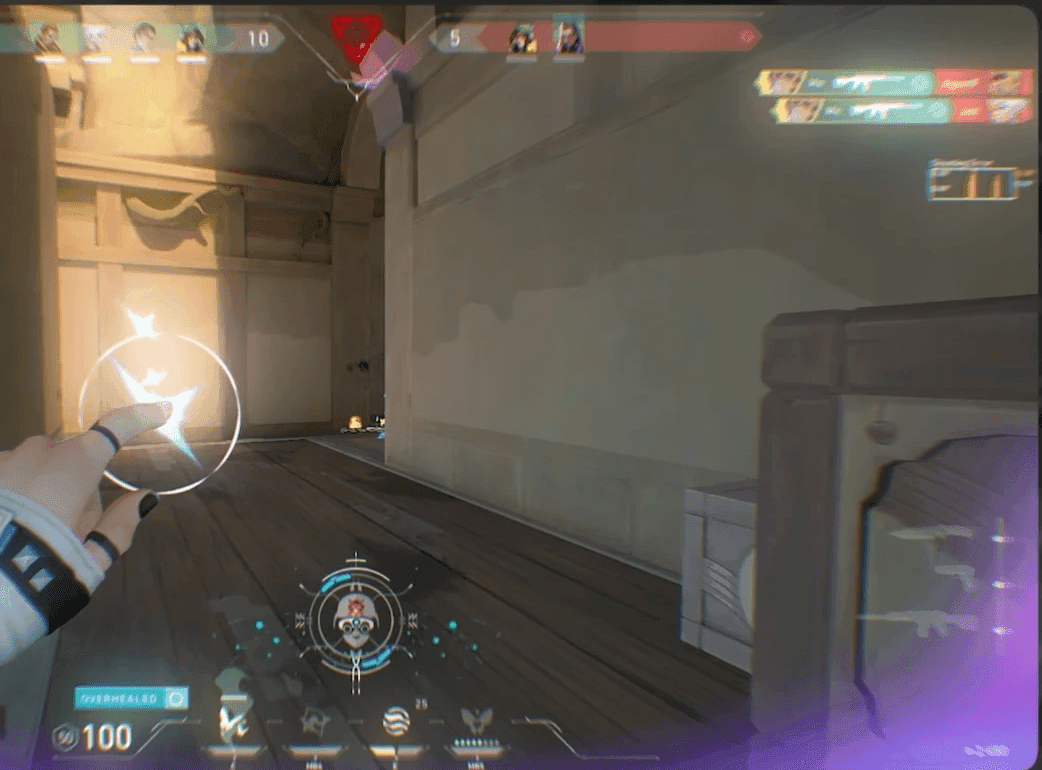
To improve your aim in Valorant, identify why your first shot misses, practice that specific action, and check it in a recorded match. A useful routine connects crosshair placement, movement timing and weapon control. A higher aim-trainer score alone cannot tell you whether you chose or executed a good ranked duel.
Start with five recent fights. Pause immediately before firing and ask whether the target was where you expected, whether you were still moving, and whether the weapon had recovered from the previous burst. Those answers tell you what to practice next.
Why are you missing shots?
Use this checklist before changing your sensitivity or doubling your practice time.
| What you see in the recording | What to investigate | First practice task |
|---|---|---|
| Your crosshair starts far from the enemy | Pre-aim and the angle you expected | Walk a common route in a custom game, clearing one threat at a time |
| You click before aligning the crosshair | Rushed target acquisition | Slow single shots at Range bots, with a small correction before firing |
| The first shot comes out during movement | Stop-to-shoot timing | Strafe, stop, fire one shot, then move again |
| Early bullets land but later ones rise or scatter | Burst length and recovery | Compare short bursts with a continuous spray on the Range target |
| The enemy moves past your crosshair before you react | Holding distance and likely peek speed | Compare a narrow peek and a wider swing with a partner |
| Your aim gets tense after the first miss | Grip, pace and the decision to stay in the duel | Reset between practice attempts, then review whether cover was available |
| You repeatedly fight two enemies at once | Exposure and duel selection | Clear one angle while keeping the other blocked by cover |
These are hypotheses to test, not a diagnosis from one frame. A missed shot can combine several causes. A shot that lands can still conceal poor timing or an unnecessary fight.
Use shooting feedback without treating it as a hit detector
The Shooting Error graph displays recent-shot error values. Riot introduced it to make the information from crosshair error settings easier to inspect after an engagement. It explains weapon accuracy; it does not confirm that your crosshair was on an enemy or that a bullet hit. Riot's Patch 4.10 explanation
For a controlled comparison, keep the same weapon and target distance. First fire after standing still and allowing the weapon to recover. Next fire during a strafe, then fire repeated bursts with shorter pauses. Compare the feedback with the bullet marks and your recording. Change one action at a time so you know what produced the difference.
Avoid memorizing a graph color as “a guaranteed headshot.” Crosshair alignment, movement error and weapon spread are different questions. The graph also cannot decide whether the duel was worth taking.
Drill 1: align before you click
Choose two stationary Range targets that require a comfortable mouse movement between them.
- Move your crosshair toward the first target.
- Make a small correction if needed, then fire one deliberate shot.
- Allow the weapon to recover before moving to the second target.
- Repeat at a pace where you can describe each miss.
Track whether you fired before alignment, overshot, or needed several corrections. Speed up only when the movement is repeatable. If you rush and cannot identify the error, slow down again.
A relaxed grip can make the exercise easier to repeat, but do not force an unfamiliar grip. Take a break when concentration drops. The goal is controlled movement, not an arbitrary score or a promise to reach a particular rank.
Drill 2: move, stop, shoot, move
With your usual rifle, strafe sideways toward a stationary target, release the movement input, and fire one shot once you have settled. Move again after the shot. Start with a deliberate pause and gradually shorten it while comparing your shot feedback.
Riot describes a movement “deadzone” as the speed boundary where movement begins to make a player inaccurate. This means “accurate” does not simply mean a perfectly literal zero-velocity frame. The beginner cue stop before shooting is useful because it avoids asking you to learn a narrow timing window before you have a reliable first shot. Riot's movement-accuracy explanation
Once the basic action is consistent, practice a direction change and a single shot around the low-speed part of that change. This is often called deadzoning. Check the result rather than assuming that pressing the opposite key made the shot accurate. Do not add rapid direction changes, flicks and long bursts all at once.
In your next recording, count ten relevant rifle shots after a strafe. How often did you fire before you intended to stop? That is a clearer practice measure than whether the session's final match was a win.
Drill 3: pre-aim one angle at a time
Open a custom game on a map you play. Pick a short route with three common enemy positions.
- Before exposing yourself, place the crosshair near the expected head position.
- Use cover to limit which angle can see you at each step.
- Clear the first threat before moving to the next.
- Repeat from the opposite side to see how your exposure changes.
Head height changes with elevation and the opponent's position. Wall textures are reminders, not a substitute for checking the actual angle. You may still need to adjust the mouse as you move; “pre-aim” does not mean every peek must happen without a mouse correction.
For the detailed placement exercise, use our crosshair placement guide. For choosing how to expose yourself, read how to stop default peeks and angle advantage versus disadvantage.
Drill 4: choose a burst before committing to a spray
On the Range target, compare a single shot, a short burst and a longer spray at two distances. Let the weapon recover between attempts. Watch where the first bullet lands, how the early recoil climbs and how the later bullets spread.
Then add movement between short bursts. Check that the next burst starts after your movement and weapon recovery, rather than firing continuously while strafing. A close fight can justify a committed spray; a small distant target often rewards a more deliberate reset.
There is no universal burst length for every gun, range and duel. Riot's Patch 11.08 made rifle spraying more viable at close and medium range and explains the difference between recoil switching and protected opening bullets. Protected bullets are not bullets guaranteed to hit. Riot's rifle changes
Use the Valorant weapons practice guide for weapon-specific exercises, Vandal habits and when to test ADS.
Holding an angle, crouching and seeing the target
When holding, leave enough space from cover for the peek you expect and your response. A tiny crosshair-width rule ignores range, movement speed, zoom and the possibility of a wide swing. With a partner, compare a narrow peek and a wider swing from the same position; review whether the enemy passed your aiming point before you clicked.
Crouching can be part of a committed duel, but it also changes your view and limits an immediate reposition. If every fight begins with an automatic crouch, try a controlled practice block where you remain standing and move between bursts. You are testing a habit, not banning crouch from every match.
Use a visible crosshair that does not obscure the target. While pre-aiming, check its relationship to the angle. When an enemy appears elsewhere, locate the enemy and make the necessary adjustment. Treat advice about “crosshair focus” or “target focus” as an exercise to compare, not a mandatory rule for every distance. Our settings guide helps you test a setup without repeatedly changing it after a bad game.
A focused 20-minute aim routine
This is a starting template. Shorten it if concentration drops and replace a block when your recording reveals a different priority.
| Time | Task | What to record |
|---|---|---|
| 3 minutes | Deliberate single shots between two Range targets | Whether you clicked before alignment |
| 5 minutes | Strafe, stop and fire; then short bursts with resets | Repeated movement or recovery errors |
| 5 minutes | Clear a short route in a custom game | Angles exposed together and crosshair corrections |
| 7 minutes | Focused Deathmatch or a longer block when time allows | One behavior, such as resetting instead of panic-spraying |
The times are an editorial practice suggestion, not a scientifically established optimum. Deathmatch is practice for a specific action; its score is not a rank prediction. Aim trainers can supplement mouse control, but still test the action inside Valorant with your weapon, movement and cover.
During ranked, carry only one cue from the routine. Afterward, mark five relevant moments in the recording. Compare the action with the previous session using the same rule. Add difficulty when execution is repeatable, not simply because you moved into a new rank.
What should you practice at your rank?
For Iron through Gold, begin by testing a reliable first shot, stopping and deliberate crosshair placement. For Platinum through Ascendant, test those same foundations alongside burst resets, exposure and changing predictable peeks. For Immortal and above, examine whether the action stays reliable while coordinating with teammates and responding to utility or pressure.
These are starting prompts, not prerequisites or a rank-specific prescription. A Bronze player may need a decision change more than a flick drill; an Immortal player may still fire too early. Choose the routine from your recording.
If mechanics look consistent but rounds keep failing, use the hardstuck review workflow. To organize your evidence, follow the VOD review checklist.
When an aim routine needs outside feedback
Ask for feedback when you cannot distinguish an execution error from a bad fight, or when the same exercise stops transferring into ranked. Bring a full match and examples of both successful and failed duels. A useful review produces one practice priority and a way to check it later.
Explore Roadmap's Valorant coaching and coaching formats if you want help building that feedback loop. You can also start with Roadmap's free tools and resources.
Game-source checks and substantive editorial update: October 11, 2026. The exercises are practice suggestions; this page does not report a controlled study or a guaranteed rank outcome.