Valorant VOD Review Checklist: Turn Mistakes into Practice
A practical Valorant VOD review workflow: choose a match, review information and positioning, log recurring mistakes, and build a focused practice plan.
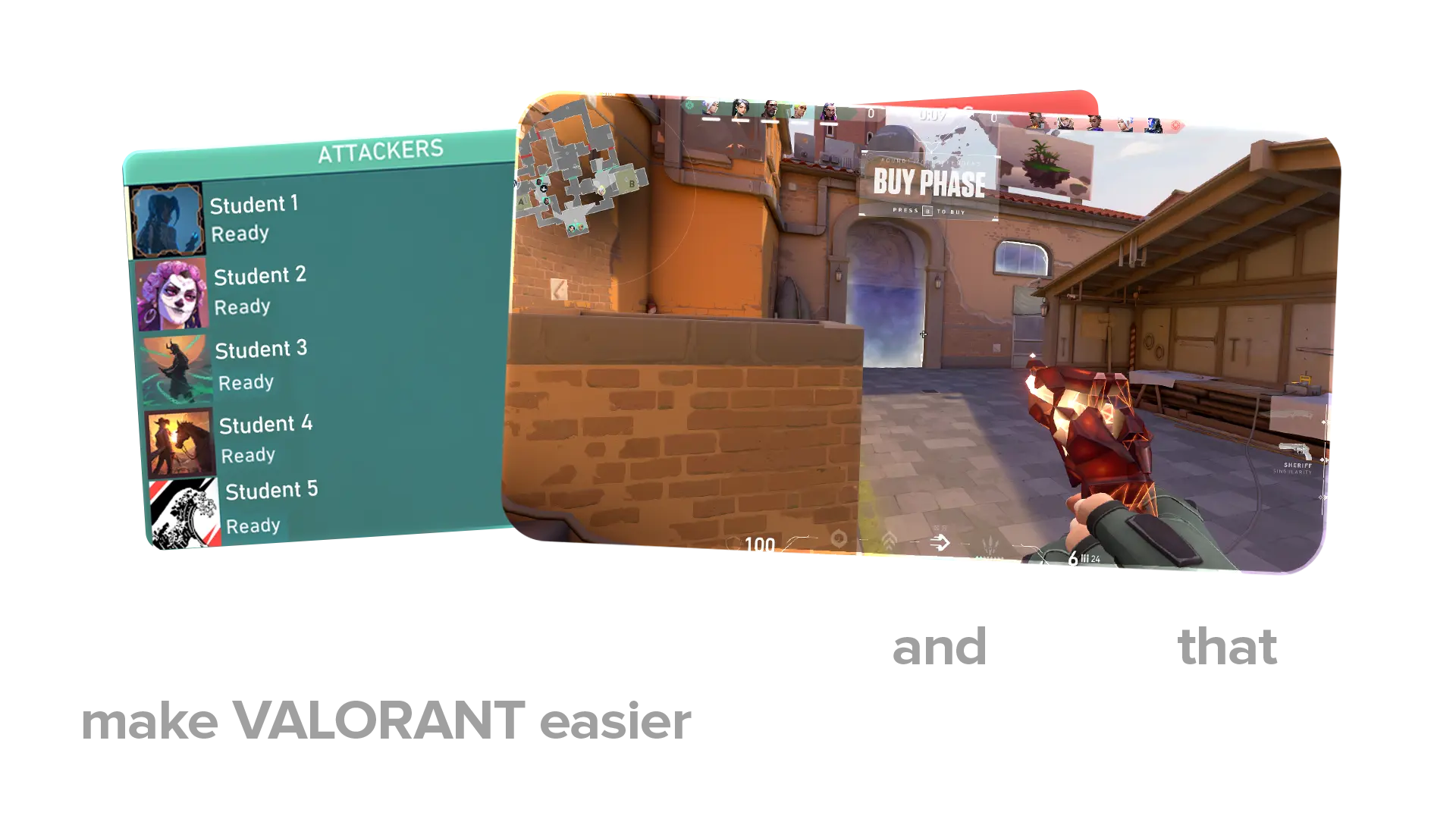
A useful Valorant VOD review finds a pattern you can change. Start with a normal, competitive match, pause before important decisions, and judge the decision using only the information available at that moment. End with one practice priority rather than a list of every mistake.
Before you record
Record your own perspective, the minimap and game audio. Check that the scoreboard and HUD are readable. If you include voice chat, respect the participants' privacy and share the recording only with the people reviewing it.
Choose a close game on an agent you actually play. Avoid using only your best match or a game dominated by an early disconnect. The aim is to examine normal habits.
Bring one question: “Why do I die first on defense?” is easier to investigate than “Why am I bad?”
Review a round in this order
1. What was the plan?
Before the barrier drops, identify your role, available utility, weapon, teammates' positions and the team's intended action. A plan does not need to be elaborate, but it should explain where you will go and what would make you change course.
2. What did you know?
Pause before a peek, rotation or ability. Separate confirmed information from assumptions. An enemy seen on the opposite site is confirmed information; the belief that the rest of the team must be there is an assumption.
Do not use the enemy's position revealed later in the video to judge what you should have known earlier.
3. Could your teammate trade you?
Look at the distance, line of sight and timing between you and the nearest teammate. If you swing before they can see the duel, calling it a “team fight” does not make it tradeable.
On the other side, ask whether you were close enough to act when your teammate made contact.
4. Did the utility create an action?
For every ability, identify the purpose: clearing an angle, blocking vision, delaying a push, protecting a plant or supporting a fight. Then check whether anyone used the opportunity.
A recon tool that reveals an enemy can still be wasted if nobody can act before the information expires.
5. Was the duel necessary?
Review player count, time, spike position and escape options. After gaining an advantage, another peek may add risk without helping the round's objective.
Distinguish “I missed” from “I did not need to take that fight.” The first suggests mechanics work; the second suggests a decision rule.
Use a small review log
| Timestamp | What happened | Earlier decision | Next-game cue |
|---|---|---|---|
| Round 5, 1:12 | Died alone entering site | Started before the supporting teammate arrived | Check teammate position before committing |
| Round 9, 0:38 | Lost a favorable post-plant | Re-peeked without a teammate | Identify a trade or disengage after contact |
| Round 14, 1:03 | Utility had no follow-up | Used it before the team was ready | Call the action before using the ability |
These rows are illustrative examples, not recorded student results. Replace them with your own timestamps and describe observable behavior rather than labels such as “bad game sense.”
Turn the pattern into a practice block
Choose the mistake that repeats and has a clear alternative. Write one short cue. Practice it in a controlled setting where possible, then look for the same situation during ranked.
After the next session, review five relevant moments. Count opportunities as well as successes: “I stayed tradeable in four of six entries” tells you more than “I won two games.”
If the cue is too hard to remember, simplify it. If the situation rarely happens, choose a more common pattern before adding another drill.
What changes when a coach reviews the VOD?
A coach can challenge your explanation, identify the decision before the visible mistake, and help select a manageable priority. Bring your own notes so the session can compare your interpretation with theirs.
Explore how to choose Valorant coaching, meet Zelo and Maru, or apply for an assessment.
Common questions
Should I review every round?
For a first pass, watch enough to understand the match and mark repeated situations. Study a few representative rounds carefully instead of spending an hour criticizing every missed shot.
Should I review wins too?
Yes. A win can hide an untradeable entry or unnecessary duel. Review decisions independently of whether the enemy punished them.
Should I change my sensitivity after a bad game?
A missed shot alone does not establish a settings problem. Check movement, crosshair placement and the fight you chose before changing your setup. Our settings guide explains how to compare changes.