Valorant Weapons Guide: How to Choose, Practice and Control Each Gun
A practical Valorant gun guide covering pistols, SMGs, shotguns, rifles, snipers and heavy weapons, with five Vandal habits and a repeatable practice plan.
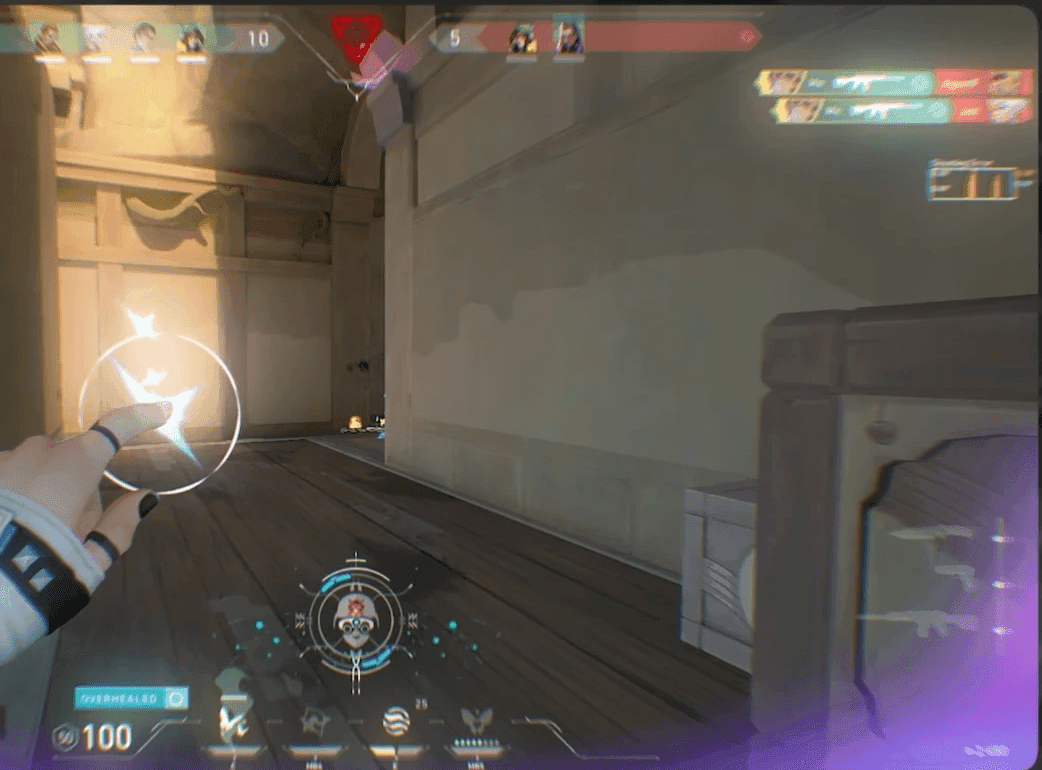
Choose a Valorant weapon for the round you intend to play: the team's buy, the distance you expect, the utility you need and the cover available after a shot. Then practice the action that weapon requires. A rifle, a shotgun and a sniper should not all be used with the same movement or firing rhythm.
This guide covers the current weapon families, including the Bandit and Warden, and gives you an exercise for each gun. It focuses on repeatable decisions and gun control rather than a tier list or a promise that one weapon will carry you out of your rank.
Make the buy fit the round
Before buying, answer four questions:
- What is the team's plan? A strong personal weapon can still leave you without useful support if everyone else is saving.
- Which fights will I take? A close defensive hold, a long opening angle and an entry behind utility ask different things of your gun.
- What else do I need? Consider armor and the abilities needed for the plan, not just the weapon's price.
- What happens after contact? Identify where you can move, who can trade and whether you can recover a weapon.
Communicate the buy during the buy phase. There are legitimate force buys and saved weapons, so “everyone must own the same gun” is not a rule. The useful question is whether your spending and positioning support the same plan.
Use the current in-client buy menu for prices, damage ranges, penetration and firing-mode details. Numbers change with patches and do not describe the whole fight. This guide's weapon families come from Riot's official arsenal; the Warden was added in Patch 13.06.
The practice method for every weapon
Use the Range target at two distances and keep a short record.
- Fire single shots after the gun recovers. Check how consistently you align the first shot.
- Compare a short burst with a longer spray where the gun supports it.
- Repeat after a strafe and after settling from movement.
- Test the alternate fire or ADS mode if the gun has one.
- Add a move back to cover after the shot.
Change one variable at a time. Do not mistake one fortunate pellet spread or running headshot for a reliable technique. For a structured first-shot and movement routine, use Valorant aim training and troubleshooting.
Pistols: control your pace and choose the distance
| Weapon | Practice focus | Exercise |
|---|---|---|
| Classic | Choose the firing mode deliberately | Compare single shots and alternate fire at close and longer Range target distances; reset between attempts |
| Shorty | Commit to a close space with an exit | In a custom game, identify one tight corner and the route you would use after contact; test the spread at different distances |
| Frenzy | Control a close burst without assuming running accuracy | Compare stationary, moving and short-burst attempts on the same target |
| Ghost | Place the first shot and recover between taps | Alternate two targets with one shot at a time; increase pace only while placement remains controlled |
| Bandit | Make a deliberate precision shot | Compare the same two-target exercise with the Ghost and Sheriff, keeping distance and movement consistent |
| Sheriff | Avoid firing faster than you can recover and align | Start with slow single shots, then shorten the pause while watching impacts |
The Bandit is a precision sidearm introduced in Riot's Patch 12.00. Whether it fits a light buy depends on the utility and armor your round also needs.
A pistol-round kill is not always a one-shot expectation. Damage depends on weapon, hit location, range and the target's protection. Check those conditions before deciding that a miss or surviving opponent proves a bug.
SMGs: create the fight your buy can handle
With a Stinger, practice a short close-range burst, a reset and a second attempt. Compare its firing modes on the Range target before taking a distant fight. With a Spectre, compare the opening burst with a longer spray, then repeat while moving between bursts.
The ranked task is to use cover and team utility to reach the distance you practiced. Buying an SMG does not make every running spray accurate, and the Spectre does not automatically “teach bad habits.” Riot adjusted both weapons in Patch 11.08, including changes intended to make the Spectre a more appealing choice in some situations.
In a VOD, pause before contact and ask: did you take the intended close fight, or challenge a distant rifle because you had no plan for the buy?
Shotguns: test spread instead of relying on movement tricks
For the Bucky, test its firing modes at several Range target distances. Compare the pellet marks rather than assuming the alternate mode is always right or always useless. For the Judge, compare a controlled opening shot with holding the trigger, and note when the spread makes a distant target unreliable.
Use the Shorty exercise above for its close-space role. For all three, choose a position that limits the opponent's options, keep an escape or teammate in mind, and avoid exposing yourself to a long sightline simply to chase damage.
Older advice to jump with a Bucky to improve accuracy is misleading. Riot's Patch 12.09 shotgun changes made shotguns less accurate while moving and jumping and emphasized deliberate close-space play. Compare current stationary and moving spread yourself; do not build your routine around a supposed jump-accuracy bonus.
Rifles: compare tapping, bursting and committing
| Weapon | What to compare in practice | Ranked question |
|---|---|---|
| Bulldog | Hip-fire bursts, ADS bursts and recovery after each | Does your chosen position give you time for the firing mode you intend? |
| Guardian | Deliberate single shots and the pace of follow-up taps | Are you placing a shot, or clicking repeatedly before realigning? |
| Phantom | Short bursts and a committed spray at two distances | Is the fight close enough for your practiced spray, and can you reset safely? |
| Vandal | First-shot placement, short bursts and a longer spray | Can you isolate the opponent and recover after a miss? |
| Warden | Scoped and unscoped attempts, then recovery to cover | Does this angle reward a controlled long-range attempt or expose you to a rushed close fight? |
The Warden is an automatic rifle with a 2x scope, introduced alongside the Vandal and Phantom in the 2,900-credit tier. Riot describes it as a long-range option. That is its intended identity, not proof it wins every long fight. Official Warden introduction
For the Phantom and Vandal, avoid rules such as “never spray” or “always fire six bullets.” Rifle spraying, bursting and tapping are choices. Distance, time, cover and how many opponents can see you affect the choice. Riot's Patch 11.08 explanation distinguishes the opening protected bullet count from later horizontal recoil switching; protection from a recoil-direction switch is not guaranteed accuracy or a kill.
Five Vandal habits to practice
1. Place the first shot before accelerating
Aim at a stationary target, fire one deliberate shot and wait for recovery. If the crosshair is consistently misplaced, fix the placement before speeding up. Then repeat after a short strafe. See the crosshair placement guide for applying this to actual map angles.
2. Choose a burst length for the target
Compare short bursts with a longer spray at close and farther distances. Record how often the first burst stays on your intended target and whether the next attempt begins before recovery. A six-bullet protected window is not a reason to commit six bullets in every duel.
3. Test ADS when precision and time allow it
Compare hip fire and ADS on the same distant target. Look at visibility, shot placement and how easily you can leave the angle. ADS is an option to evaluate, not a mandatory action above an invented distance threshold. Remember that using a firing mode also changes how the duel feels and how much view you have around the target.
4. Reset movement and the weapon separately
Practice move, stop, short burst, recover, move. Stopping does not erase recoil from a burst you just fired. Reversing direction does not by itself prove the next bullet was accurate. Use the feedback from the shot and the target to test both timings.
5. Expose yourself to one threat
In a custom game, clear an angle while another is blocked by cover. Repeat while moving too wide and compare how many positions can see you. In ranked, combine cover, teammate spacing and useful utility. The goal is a manageable duel, not a guarantee that an unseen opponent cannot be elsewhere.
Use the APE peeking guide to connect the weapon exercise with assessing, preparing and executing a peek.
Snipers: make the first attempt survivable
For the Marshal, practice deliberate scoped attempts, recovery and a move behind cover. A quick unscoped hit can happen; it should not replace testing the shot you can repeat.
For the Outlaw, compare a first shot, a follow-up and the reload situation. Check the actual target protection and buy state before choosing it. The opponent's money alone does not tell you which armor every player has.
For the Operator, choose an angle with a clear route to safety or teammate support. In a custom game, rehearse the peek, shot and retreat. Then rehearse how you would change the position after revealing it. An expensive weapon does not make an unsupported re-peek necessary.
In each case, review whether the opening angle served the round plan and whether you had an option after a miss. Judge this before the eventual kill appears in the recording.
Heavy weapons: pair the gun with information
With the Ares and Odin, compare the opening spray with a longer committed attempt at a Range target. Test ADS and movement recovery rather than treating a heavy weapon as accurate during any motion.
For penetration practice, use a custom game and a partner to test the exact surface and position. Map geometry and materials can change; an old wallbang demonstration is not proof that the current surface behaves the same way. Base a ranked attempt on actual information or a useful timing, not on spraying a wall because the gun has a large magazine.
After contact, review how you handled reload time, a new threat and your exit. Those decisions are as useful to practice as the first spray.
Tactical knife: movement is not permission to expose yourself
Use the knife when the route is reasonably safe and speed matters. Before switching, ask what information rules out a nearby opponent and how long you need to re-equip your weapon. Practice the transition on a common rotation route. A fast arrival does not help if you enter a contested angle unable to shoot.
Turn weapon practice into a weekly review
Pick your usual rifle and one weapon you actually use on light rounds. Spend a short practice block on the specific mistake from a recent match; rotating through every gun every day can hide that priority.
| Review note | Example to replace with your own evidence |
|---|---|
| Intended fight | Hold a close angle with an SMG alongside a teammate |
| What happened | Took a distant duel before the teammate arrived |
| Execution issue | Fired continuously while moving instead of resetting |
| Next-session task | Repeat the close burst/reset, then stay within trade distance |
| Check in the next VOD | Count the relevant fights and how often the planned action happened |
This example is illustrative, not a student's result. Track opportunities as well as successes, and keep the same definition between sessions. Use the VOD review checklist when the issue combines economy, mechanics and positioning.
If you want help deciding which practice matters most, explore Roadmap's Valorant coaching or how to choose a coaching format. A useful session should connect your own match examples to an exercise and a follow-up check.
Game-source checks and substantive editorial update: October 11, 2026. Check current in-client stats and official patch notes before relying on damage thresholds or an older demonstration. These exercises do not guarantee a rank or win-rate increase.