Valorant Coaching: How to Choose a Coach and Get Better
Choose a Valorant coach with a practical checklist. Match your goal to a format, prepare your first review and measure changes in your decisions.
Valorant coaching helps you identify repeatable mistakes in your own matches and turn them into a practice plan. A useful session ends with a specific decision to change, a way to practice it, and evidence to look for in your next recording.
A high rank or competitive résumé gives context, but the practical question is whether a coach can explain why a round went wrong using the information you had at the time. Ask how they would check that their feedback is working.
Write your coaching brief before comparing offers
Use these five lines to make an assessment specific. Keep the recording private and share it only with the reviewer you choose.
| Bring this | Write something observable |
|---|---|
| Goal | “Understand why my entries leave teammates unable to trade,” rather than only “reach Diamond” |
| Context | Current rank, region, timezone, usual role and agents |
| Evidence | One ordinary match, plus three timestamps where the same question appears |
| Previous attempt | The cue or drill you tried, how often, and what still confuses you |
| Available time | Your actual weekly practice and meeting windows, including work or school constraints |
An illustrative fit decision: a player who can explain a movement mistake but has never practiced it might begin with a focused exercise. A player who cannot tell whether deaths come from movement or isolated fights needs diagnosis first. A player who understands the fix but repeatedly abandons it should ask how follow-up reviews work. These are decision prompts, not tested predictions of who will climb.
Which coaching format fits your goal?
| Format | Useful when | What to leave with |
|---|---|---|
| One-on-one VOD review | You keep making the same mistakes but cannot identify them | Timestamped examples and one or two priorities |
| Live coaching | You need help noticing decisions as a match develops | A short debrief and cues you can use without prompting |
| Group lesson | You want an explanation of a shared topic, such as trading or retakes | An exercise you can apply to your own role |
| Guided scrim | You want to practice communication and coordination | A team plan and a review of how it played out |
| Structured program | You want repeated feedback and accountability over several weeks | A schedule, follow-up reviews and a way to measure progress |
A single review can be enough to identify a problem. A longer program is useful when the hard part is consistently changing the behavior. Neither format removes the need to practice between sessions.
Coaching, self-study or a free tool?
Start with the smallest format that solves the actual problem. If you know your crosshair is consistently too low, a focused aim practice block may be enough to begin. If you cannot explain why the same duel fails, a VOD review can help diagnose it. If you identify the issue but abandon the change after a few games, repeated reviews or a structured program may fit better.
Free tools and AI feedback can help organize practice or surface questions. Check what information the tool actually sees: match statistics cannot show every angle, communication or earlier decision in a full recording. A suggestion is something to test, not proof that the diagnosis is right. Human feedback also varies in quality; ask the reviewer to support the explanation with your own examples.
Use Roadmap's free resources to explore a practice topic before making a purchase. Choose a paid format when its personal feedback, schedule and follow-up address a need you can name.
What should you ask a Valorant coach?
- Can we review an ordinary close match? A highlight reel hides the decisions you repeat in ranked.
- How do you distinguish mechanics from decision-making? Missing a shot and taking an unnecessary duel need different fixes.
- What is my first practice priority? A long list of errors is less useful than one change you can recognize and repeat.
- How will we check progress? Ask for a comparison between an initial recording and a later one.
- Who provides the feedback? Check the coach's own background and how coaching assignments work.
- What does the price include? Confirm session length, follow-ups, scheduling, access and cancellation terms before enrolling.
Compare the total commitment, not just the headline price
Ask for the scope in writing so you can compare offers fairly.
| Question | Why it matters |
|---|---|
| Is the price for one session, a recurring subscription or a fixed program? | The same number can represent very different commitments |
| How long is a review and which parts happen live? | A recording review, a call and written notes are different deliverables |
| What practice is expected between meetings? | Feedback is useful only if you can apply it in your available time |
| Can I choose my coach or change a scheduled session? | Availability and fit matter as much as credentials |
| What access ends when the program ends? | A lesson library, community and feedback may have different access rules |
| Which cancellation or refund conditions apply to me? | An outcome promise needs an exact baseline, deadline and eligibility rules |
Do not infer that the cheapest session is best value or that the longest program is necessary. A player with one clear question can benefit from a single review; a player who needs sustained accountability may prefer a program. Keep your budget and practice schedule part of the decision.
How Roadmap's coaching works
Roadmap combines live lessons, guided scrims and one-on-one VOD reviews in a 10-week program. Your starting rank and RR are recorded so you can compare progress against a consistent baseline. Start with a free assessment call to discuss your rank, schedule and goals. Pricing is discussed during that call.
See Roadmap's Valorant coaching program before the call, then confirm the coach assignment, meeting schedule, included access and total price for your enrollment. The assessment should help you decide whether that commitment fits; it does not replace reading the agreement.
The program advertises a +500 RR money-back promise. Read the program terms and confirm the applicable conditions before joining; the promise is not a reason to expect every week or every match to produce a gain.
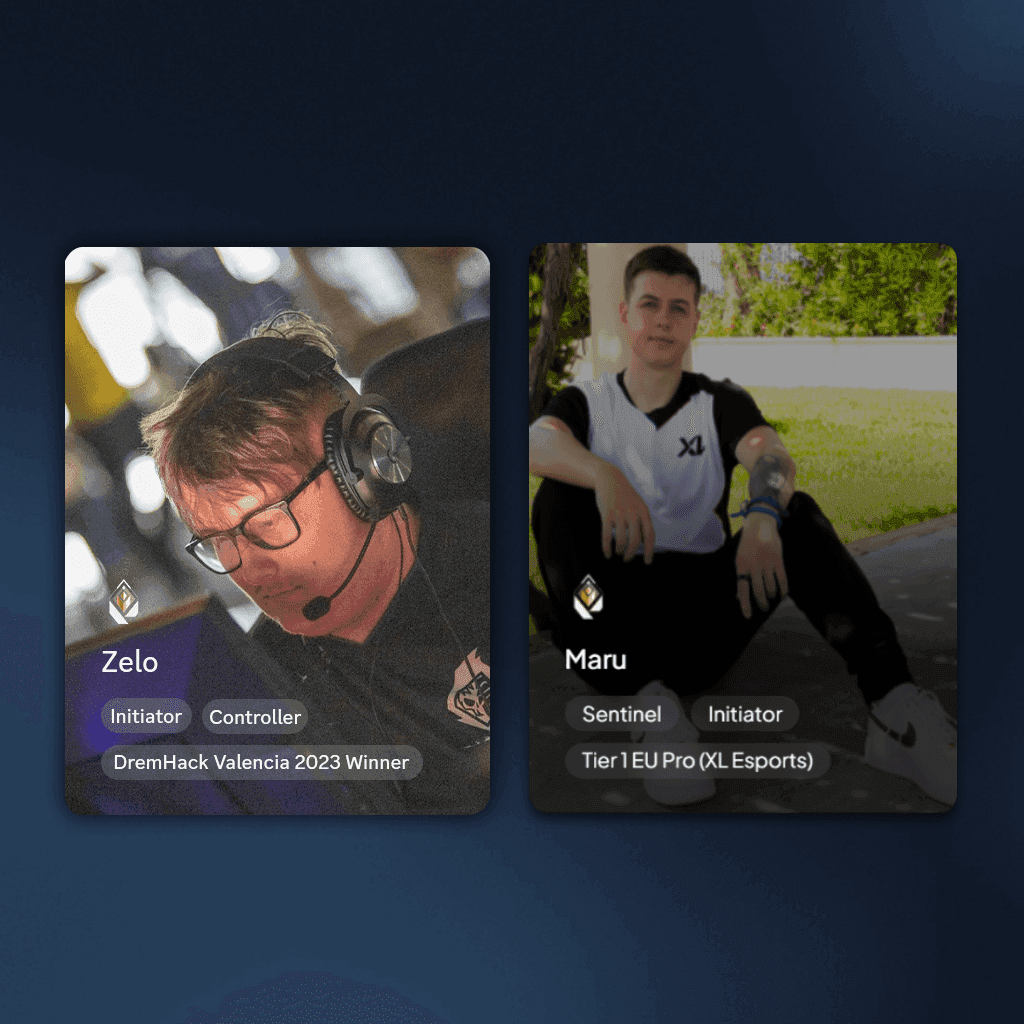
The homepage features Zelo, whose background includes competitive play and team coaching, and Maru, a former EXCEL player. Their profile pages separate historical credentials from current coaching topics. Ask during the assessment which coach and schedule fit your goals.
What should you practice at your rank?
Use rank as a starting point, then let a recording determine the actual priority.
- Iron through Gold: check whether you stop before firing, clear angles deliberately and keep your crosshair near the next likely threat.
- Platinum through Ascendant: review spacing, utility timing, unnecessary re-peeks and decisions after gaining an advantage.
- Immortal: examine role execution, coordination, adaptation and recurring mistakes under pressure.
These are review prompts, not a diagnosis. An Immortal player can still need a mechanics correction; a Gold player can lose rounds through poor rotation timing.
Leave the first session with a testable plan
Ask the coach to complete this short handoff with you:
- Pattern: name the repeated action and point to representative timestamps. “Poor decisions” is too broad; “swinging before a teammate has a line of sight” can be checked.
- Alternative: explain what you could do with the information available then, including when that alternative would be wrong. Waiting for support is not always appropriate when time forces action.
- Cue and exercise: choose one reminder and one practice task. Agree where to practice it and when to stop for review; do not treat an arbitrary repetition count as a proven training dose.
- Evidence: decide which later situations qualify for comparison. Count opportunities, successful attempts and unclear examples separately.
- Next decision: agree what would make you continue the exercise, simplify the cue or revisit the diagnosis.
For example, “check the trade partner before entering” can become a review question: in the next recording, could the teammate see the relevant fight when you committed? Record the timestamp and context instead of crediting every round win as success. If the recording hides the teammate or communication, mark that example uncertain.
Use the VOD review worksheet to keep the baseline and follow-up comparable. Track the behavior separately from RR: a better decision can lose a duel, and a poor decision can win one. A few reviewed situations help you choose the next practice step; they do not establish a reliable rank forecast.
If a coach cannot make the plan specific, ask for clarification before purchasing a longer commitment. If the plan is clear but your available practice time does not fit it, resolve the schedule rather than promising attendance you cannot sustain.
Questions about Valorant coaching
Is coaching worth it if I am low ranked?
It can be useful if you need help identifying a priority and are ready to practice it. If you already know what to work on, try a focused practice block first. Read our crosshair placement guide and hardstuck guide before deciding.
Do I need to copy a professional player's settings?
No. Settings should let you aim and move comfortably and consistently. Copying a player's setup does not copy their decisions or practice history. Use our sensitivity and settings guide to evaluate changes.
What should I bring to my first session?
Bring a full match recording with your perspective and game audio, your usual agent and role, one question, and a realistic practice schedule. Follow the VOD review checklist to make the session more useful.
Can a coach guarantee that every match gains RR?
No coaching session controls your opponents, teammates or every match result. Evaluate feedback by what you can change and verify over time. A program's written money-back conditions are a separate business policy; confirm them before joining rather than interpreting the headline as a match-by-match prediction.
Substantive editorial update: October 23, 2026. Prepared with AI assistance. A named coach's technical review is pending. Scenarios are illustrative; format comparisons describe use cases, not tested superiority over another provider.